MYOSIMPLE: In-Office Integration Protocol
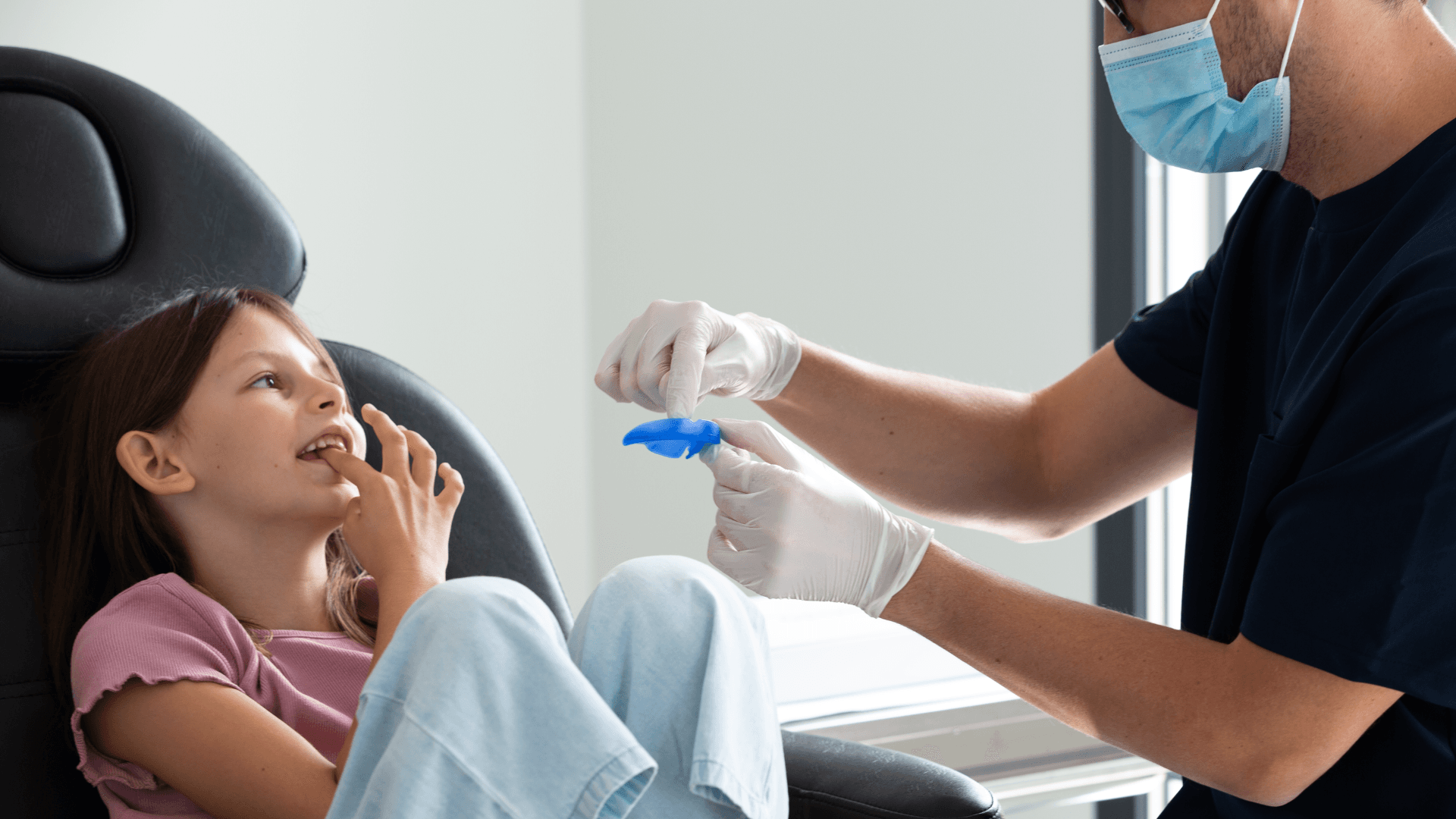
Therapeutic Objectives
• Rehabilitate orofacial dysfunctions: mouth breathing, infantile swallowing, low tongue posture, unilateral non-alternating mastication, and parafunctions.
• Support or stabilize orthodontic treatment by improving muscular balance.
• Stimulate growth and neuromuscular function according to the principles of orofacial myofunctional therapy.
Patient Selection
Indications :
• Orofacial dysfunctions (poor tongue posture, mouth breathing, atypical swallowing, parafunctions).
• Mild to moderate Class II or Class III malocclusions.
• Anterior crossbite involving one or two teeth.
• Prevention or stabilization following orthodontic treatment.
Relative contraindications:
• Severely disorganized occlusion preventing proper insertion of the MyoSimple device.
• Uncooperative or poorly motivated patients (particularly young children).
Initial Assessment
• Clinical observation: breathing pattern (nasal or oral), lip posture, tongue position, type of mastication (alternating or not), etc.
• Baseline documentation: photos, impressions, or intraoral scans.
• Radiological examination if needed.
• Explanation to the patient and parents of the purpose of the MyoSimple device and the role of the functional rehabilitation.
Implementation of the Personalized Program
a. Note: The following guidelines are examples to be adapted by each practitioner or therapist according to their own rehabilitation program.
• Define simple and progressive objectives (e.g., keeping the mouth closed at rest, correcting tongue position).
• Present daily home exercises (3–5 minutes, twice a day).
• Provide hands-on demonstrations in the office and immediate correction of gestures.
• Give the patient an illustrated exercise sheet.
b. Patient Education
• Explain the functional purpose of the appliance in simple terms.
Practical demonstration:
o Correct positioning in the mouth.
o Nasal breathing during use.
o Swallowing with the appliance in place.
Initial wearing time:
o 10–15 minutes per day, gradually increasing to 30–60 minutes or more as needed.
o Nighttime wear during sleep if indicated.
b. Associated program:
• Myofunctional exercises at the office or at home:
o Maintaining lip closure.
o Secondary swallowing (tongue on the palate, dental arches closed on the MyoSimple).
o Directed nasal breathing.
o Global postural exercises if necessary.
Functional rehabilitation in with the MyoSimple appliance is not limited to wearing the device - it involves providing the patient with the understanding, exercises, and motivation needed to achieve lasting change.
The patient must understand what they are doing, how they are doing it, and most importantly, why they are doing it.
- Use a mirror or diagram to show the correct tongue and lip positions.
- Motivate the child: focus on regular practice rather than perfection.
Clinical Follow-Up
Week 1 – Tolerance, adaptation :
Check comfort, absence of pain or injury, encourage regular use.
Week 4–6 – Repetition of correct gestures :
Review exercises, adjust wearing time.
Week 8–10 – Functional improvement :
Evaluate breathing, tongue posture, muscle tone.
Week 12+ – Long-term integration :
Ongoing follow-up, adapt protocol or device if necessary.
Hygiene and Maintenance
• Rinse after each use (lukewarm water + mild soap).
• Gently brush the appliance with a soft toothbrush.
Traceability
To be recorded in the patient file:
• Date of integration and instructions provided.
• Associated exercise program.
• Observations at each visit (tolerance, progress, cooperation).
Key Success Factors
• Patient (and parent) involvement.
• Regular monitoring of breathing and tongue function.
• Gradual increase of wearing time.
• Coordination with a speech therapist or physiotherapist if needed.